
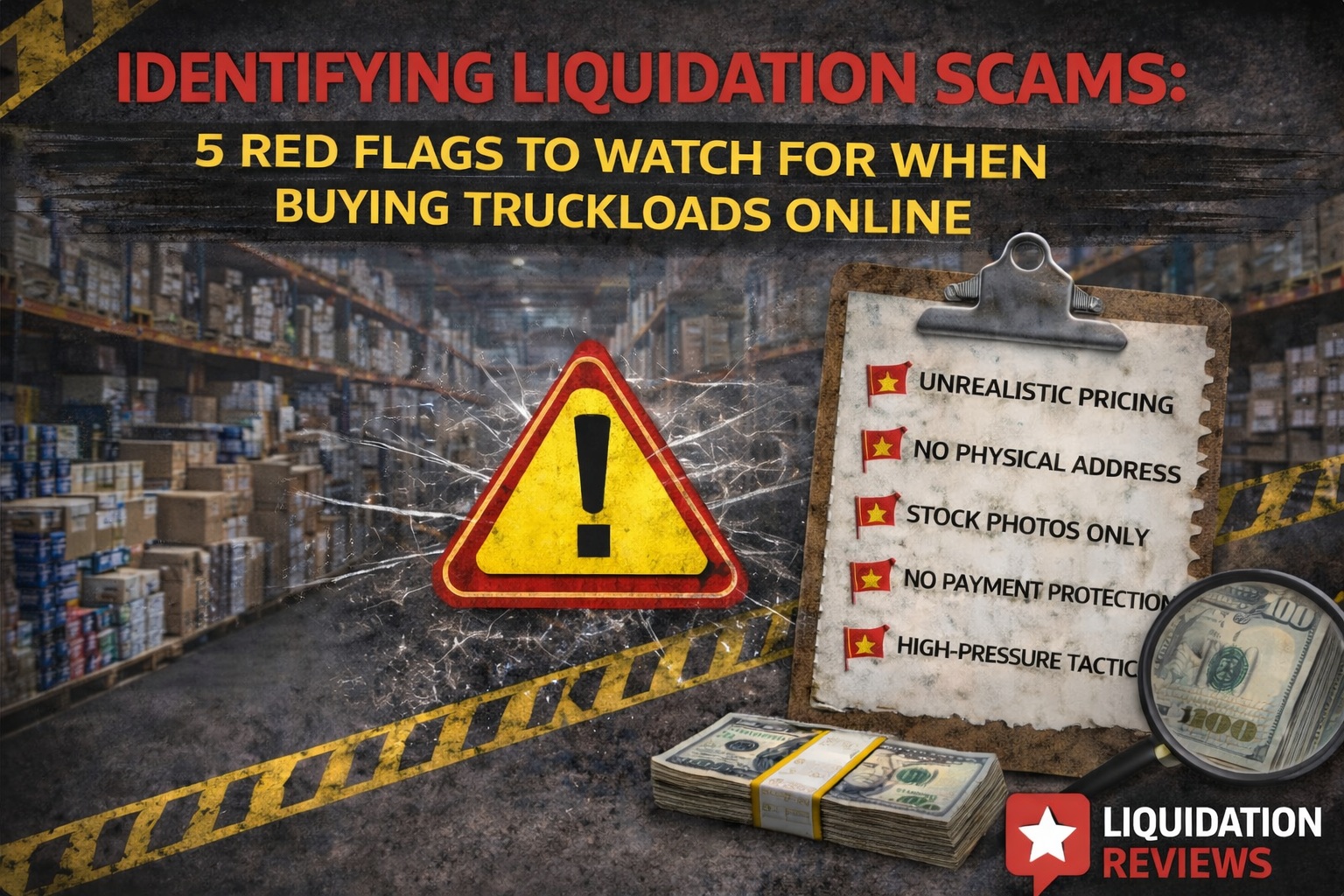
The liquidation industry is booming in 2026, but with high demand comes a surge in sophisticated fraud. For independent resellers, a single bad truckload isn't just a setback—it can be a business-ending event. At LiquidationReviews.com, we’ve analyzed hundreds of buyer reports to identify the patterns scammers use to bait their victims.
Sourcing inventory should be about ROI, not damage control. To protect your capital, you must learn to avoid liquidation scams by spotting these five critical red flags before you ever hit "send" on a wire transfer.
In 2026, everyone knows what a Target Overstock or Amazon High Piece Count load is worth. If a seller offers a "manifested electronics truckload" for 50% less than the current market rate, it’s a scam. Genuine liquidation is sold at a discount, but it still follows market supply and demand. Scammers use "rock-bottom" pricing to create a sense of urgency, hoping you’ll bypass your due diligence in the rush to secure a deal.
Legitimate wholesalers and top-rated companies will always offer secure payment paths, typically via business wire, credit card, or established third-party platforms. If a seller insists on Zelle, CashApp, or cryptocurrency, walk away. These methods offer zero buyer protection and are the preferred tools of "ghost" brokers who disappear as soon as the funds clear.
Scammers rarely have their own inventory. They often steal high-resolution photos from the websites of verified industry leaders. Pro Tip: Use a reverse image search on any pallet or warehouse photos provided. If the same photo appears on multiple unrelated websites or old social media posts, you are likely looking at a fraudulent listing. Before you buy, consult our buyers guide for tips on how to request "live" photo verification.
Every real liquidation company has a physical footprint. If a company’s "About Us" page is vague or their listed address is a residential home or a virtual P.O. box, be extremely cautious. A quick Google Maps search can often reveal if a company is operating out of a legitimate 50,000 sq. ft. facility or a suburban living room. Verified platforms are transparent about where their trucks ship from.
Real brokers are busy managing logistics; they don't have time to harass you with twenty messages an hour. Scammers use high-pressure tactics—claiming "another buyer is about to take it" or "the price goes up at noon"—to prevent you from doing a manifest audit. If the salesperson is pushing you to pay before you’ve reviewed the carrier’s information, it’s time to find a new supplier.
The liquidation market is a powerful tool for scaling your retail business, but only if you buy with your eyes open. By sticking to verified sources and watching for these red flags, you can build a sustainable, profitable inventory pipeline. Always do your homework, check the reviews, and never let the "perfect deal" cloud your judgment.